Inside Veikkaus’ rapid AI transformation
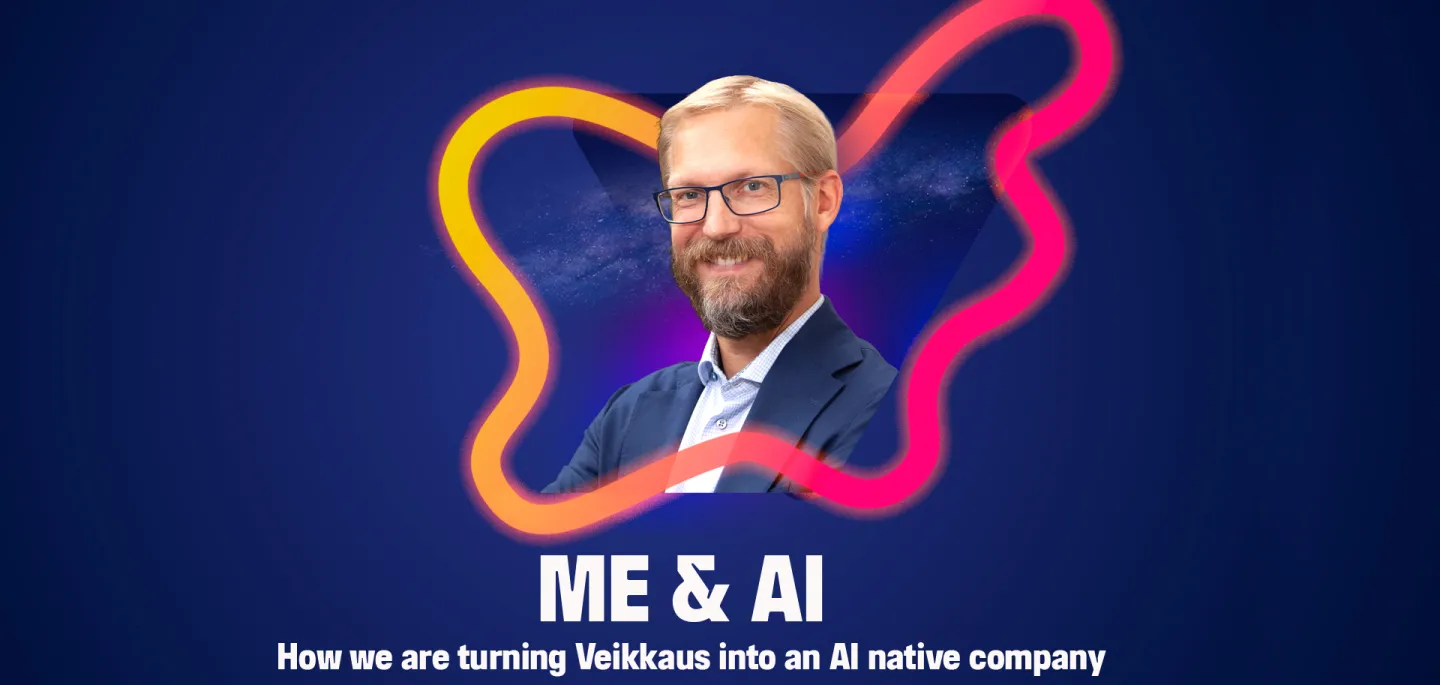
At Veikkaus, we have made a clear commitment: to ensure artificial intelligence delivers visible, tangible impact across the entire organization. But how does a company move beyond buzzwords and turn this goal into everyday reality? This is the story of our AI transformation — a journey built not on rigid, top-down plans, but on rapid execution, empowering our people, and fostering a culture of curiosity and action. In just a few months, we’ve gone from initial ideas to providing powerful, secure AI tools to our whole personnel with over 90% adoption rate, fundamentally changing how we work and innovate.
Turning uncertainty into action and trust
Our AI journey began with a simple but powerful mandate: AI at Veikkaus would not be a niche technology for a select few, but a visible and impactful tool for everyone. However, a detailed roadmap for achieving this didn’t exist. It had to be invented.
This ambiguity became our starting point. Instead of getting bogged down in creating the perfect multi-year strategy, we focused on establishing the right mindset. We fostered an environment where curiosity about AI was valued more than caution — a crucial balance that made transformation possible.
From day one, a core principle was that AI should be for the entire company. We worked hard to avoid creating “shadow AI” in isolated pockets of the organization. This commitment to a unified, non-competitive approach, where every success benefits everyone, built a foundation of trust that has been essential for our progress.
Action over analysis: an agile operating model
To bring our ambition to life, we needed a structure that enabled flexibility and speed. We adopted an operating model that prioritizes action and rapid learning. To be truly agile, you need a good structure, and ours is built to deliver value quickly.
Every new idea follows a clear, transparent path:
- Business Case First: We don’t start with technology. We start by identifying a business need and defining the value we aim to create.
- Rapid Proof of Concept (POC): We give ourselves less than a week to validate whether an idea is worth pursuing. This helps us fail fast and focus our resources effectively.
- Minimum Viable Product (MVP): If a POC is successful, we create a working product that business stakeholders can test and give feedback on. This ensures we are building something people actually need.
- Deliver and Scale: Only after validation do we move to productize and launch a solution for wider use, continuously measuring its impact.
This fast-paced model has been incredibly effective. In the first few months alone, it generated over 200 ideas and 50 business cases, with over 30 solutions currently in our pipeline.
Empowering people, starting with leaders
Technology is only one part of the equation. True transformation begins with a shift in mindset. We focused on fostering the right outlook first, knowing that the skills and effective application of technology would grow from that foundation. This is why we adopted a people-first approach, starting with our leadership.
We initiated a personalized mentoring program for our top 50 leaders, including the CEO and C-level executives from every business unit. The goal was to demystify AI, set realistic expectations, and empower them to become role models for their teams. These sessions helped align everyone on what is possible with AI today — dispelling both exaggerated fears of job loss and misconceptions that our data wasn’t “ready” for AI.
This top-down engagement was crucial. When leaders understand and use AI themselves, they can guide their teams authentically and champion a culture of innovation.
AI for all: democratizing capabilities
Our most significant practical step was making AI tools accessible to everyone. True transformation couldn’t happen if only 40% of our personnel could access AI. We needed a secure, compliant, and universally available solution.
Faced with a public procurement process that could take months, we made a bold decision. We embraced a “good enough for now, perfect for this moment” philosophy. In mid-August, we decided to build our own AI platform. By September, we had started development, and just two months later, we launched it.
Today, our internal AI platform gives every employee at Veikkaus access to powerful capabilities in a secure environment. Adoption has been explosive:
- In one month, we had 700 users.
- We currently have over 1,100 users, representing about 90% of our personnel.
- The platform is also incredibly cost-effective, operating at a fraction of the cost of comparable commercial licenses.
This platform has moved our people away from private, non-compliant tools and has become a hub for innovation. We built it to offer much wider capabilities, with an API that connects powerful language models directly into our coding and office software. The introduction of Claude’s coding model, for instance, has been a massive success. It is driving huge efficiency gains not just for our developers, but for people in many other roles who have discovered new ways to leverage AI.
Looking ahead: the AI native era
Our journey is far from over. We have successfully moved from curiosity to measurable impact, but we are now entering what we call the “AI Native” era. For us, becoming AI Native means moving beyond simply optimizing individual tasks. It’s about fundamentally redesigning entire business processes with AI at their core. Instead of asking how AI can improve a single step, we are now asking: “If we built this entire process from scratch today, how would it work with AI?”
Tackling this level of transformation might seem daunting, but it reinforces the value of the approach we’ve taken so far. We’ve learned that in the fast-evolving world of AI, it’s impossible to plan everything a year in advance. The key is to make small decisions quickly, stay nimble, and build momentum. Our agile, action-oriented operating model is precisely what will guide us through this next phase. By continuing to empower our people with the right tools and a shared vision, we will move from enhancing our work to truly transforming it.